
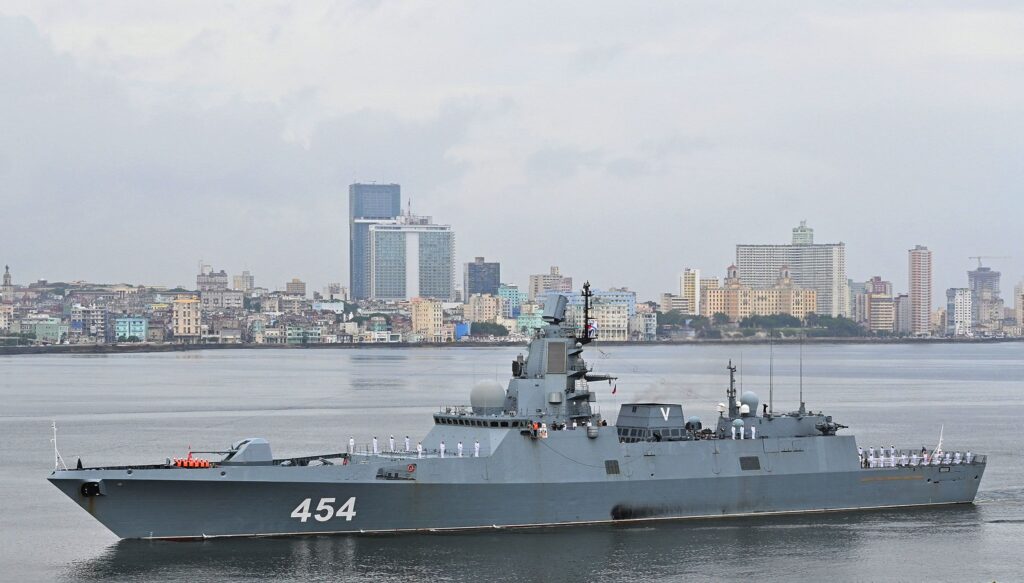

On Board the Russian Warship Visiting Cuba: A Symbol of Renewed Ties
In a move that highlights the strengthening ties between Russia and Cuba, a Russian warship has made a significant visit to Havana. This event is not just a demonstration of naval prowess but also a symbol of the deepening relationship between the two nations in an era of shifting geopolitical alliances.
The sleek silhouette of the Russian warship glided into Havana’s historic port, capturing the attention of locals and international observers alike. The arrival of the vessel, adorned with the Russian tricolor, was marked by a ceremonial welcome, reflecting the historical camaraderie between the two countries that dates back to the Cold War era.
The ship, identified as part of Russia’s Northern Fleet, is equipped with state-of-the-art technology and weaponry. Its presence in Cuba signifies a renewed commitment to military and strategic cooperation between Moscow and Havana. The visit is part of a broader Russian naval tour aimed at showcasing military strength and forging stronger international ties.
Strategic Significance
This visit is more than a mere naval exercise; it’s a strategic maneuver in the complex chessboard of global politics. For Russia, it represents a foothold in the Western Hemisphere, reminiscent of the Soviet era when Cuba was a pivotal ally. The move comes at a time when Russia is seeking to expand its influence in Latin America, countering the United States’ dominance in the region.
For Cuba, the visit underscores its ongoing efforts to diversify its international alliances amid persistent economic challenges and a longstanding embargo imposed by the United States. Strengthening military ties with Russia provides Havana with a powerful ally and a potential source of military and economic support.
Activities on Board
During the ship’s stay in Havana, a series of activities have been planned to foster goodwill and cooperation between the Russian and Cuban military personnel. Joint drills, cultural exchanges, and official meetings are on the agenda, aimed at enhancing mutual understanding and collaboration.
Cuban officials, along with Russian diplomats and military leaders, have toured the warship, witnessing firsthand the advanced technology and capabilities of the vessel. Discussions have likely covered a range of topics, including military training, intelligence sharing, and potential arms deals.
Historical Context
The visit of the Russian warship to Cuba harks back to the days of the Cold War when the Soviet Union and Cuba shared a close alliance. The most notable episode of this relationship was the Cuban Missile Crisis of 1962, which brought the world to the brink of nuclear war. Today, while the geopolitical landscape has changed, the echoes of that historical partnership remain.
In recent years, Russia and Cuba have sought to rekindle their ties, with high-level visits and agreements on various fronts, including energy, agriculture, and defense. This warship visit is a continuation of that trend, signaling both nations’ willingness to stand together in an increasingly multipolar world.
Global Reactions
The international community has been keenly observing this development. The United States, in particular, is likely to view the visit with caution, given the historical tensions and the current geopolitical rivalry with Russia. Other nations in Latin America and beyond are also watching closely, assessing the implications for regional security and alliances.
The visit of the Russian warship to Cuba is a significant event, symbolizing the strengthening ties between Moscow and Havana. It reflects a strategic partnership that goes beyond military cooperation, encompassing broader political, economic, and cultural dimensions. As global geopolitics continue to evolve, the renewed camaraderie between Russia and Cuba will undoubtedly play a crucial role in shaping the future landscape of international relations.