
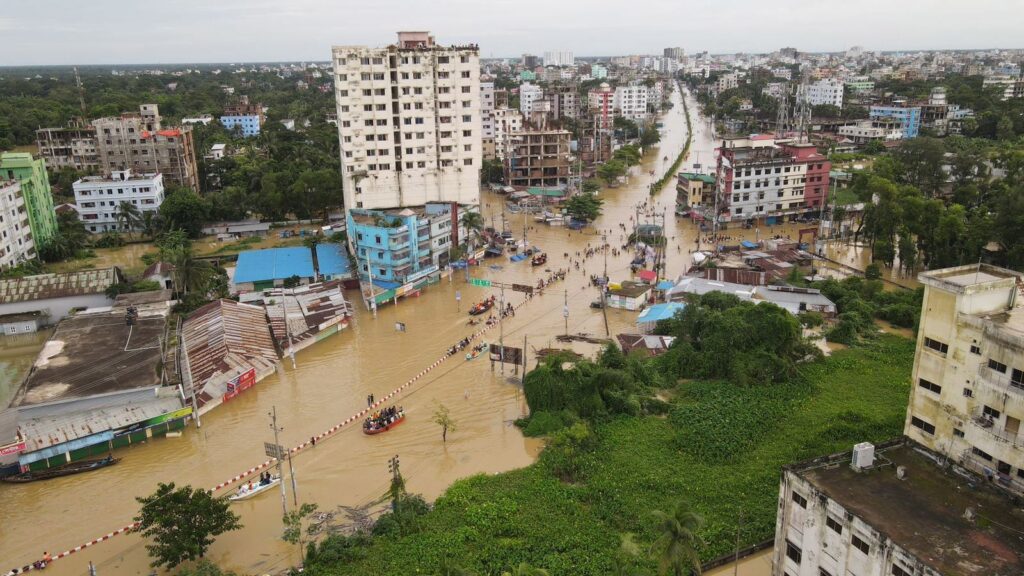

Floods Kill More Than 30 in Bangladesh and Northeast India
In a tragic turn of events, relentless monsoon rains have unleashed devastating floods across parts of Bangladesh and northeast India, resulting in the deaths of more than 30 people and displacing tens of thousands. The relentless downpour, which began earlier this week, has triggered flash floods, landslides, and widespread damage to infrastructure in the affected regions.
Devastation in Bangladesh
In Bangladesh, at least 20 people have lost their lives due to the floods, which have severely impacted the Sylhet and Chittagong divisions. Sylhet, located in the northeastern part of the country, has been one of the worst-hit areas. Continuous rainfall has caused the Surma and Kushiyara rivers to swell, submerging villages and towns.
The flooding has forced thousands of families to evacuate their homes, seeking refuge in temporary shelters set up by the government and non-governmental organizations. Many of these shelters, however, are overcrowded, lacking adequate sanitation and clean drinking water, raising concerns about the potential spread of waterborne diseases.
The Bangladeshi government has deployed military personnel to assist in rescue and relief operations. Boats and helicopters are being used to reach stranded individuals in remote areas. The situation remains critical as weather forecasts predict more rain in the coming days, exacerbating the crisis.
Northeast India Faces Similar Wrath
In neighboring India, the northeastern states of Assam and Meghalaya have borne the brunt of the floods, with at least 15 fatalities reported so far. Assam, which is prone to annual floods, is experiencing one of its worst flood seasons in recent years. Over 2 million people in the state have been affected, with vast stretches of agricultural land submerged under water.
In Meghalaya, heavy rains have triggered landslides, leading to road blockages and making rescue efforts challenging. The Brahmaputra River, one of the major rivers in the region, has breached its banks in several areas, inundating nearby villages and towns. The Indian Army, along with the National Disaster Response Force (NDRF), has been actively involved in rescue operations, evacuating people to safer locations.
Humanitarian Crisis Looms
The ongoing floods have raised fears of a looming humanitarian crisis in both Bangladesh and northeast India. With thousands displaced and basic necessities in short supply, there is an urgent need for international aid and support. Relief organizations are calling for immediate assistance to provide food, clean water, medical supplies, and temporary shelter to the affected populations.
Climate experts have pointed to the increasing frequency and intensity of monsoon rains in the region, attributing it to climate change. The disaster underscores the vulnerability of South Asia to extreme weather events and the pressing need for comprehensive disaster preparedness and climate resilience measures.
As the affected regions brace for more rain, the situation remains dire. Governments and aid agencies are racing against time to provide relief to those in need, but the scale of the disaster poses significant challenges. The loss of life and widespread displacement serve as a stark reminder of the destructive power of nature and the urgent need to address the impacts of climate change in vulnerable regions.