
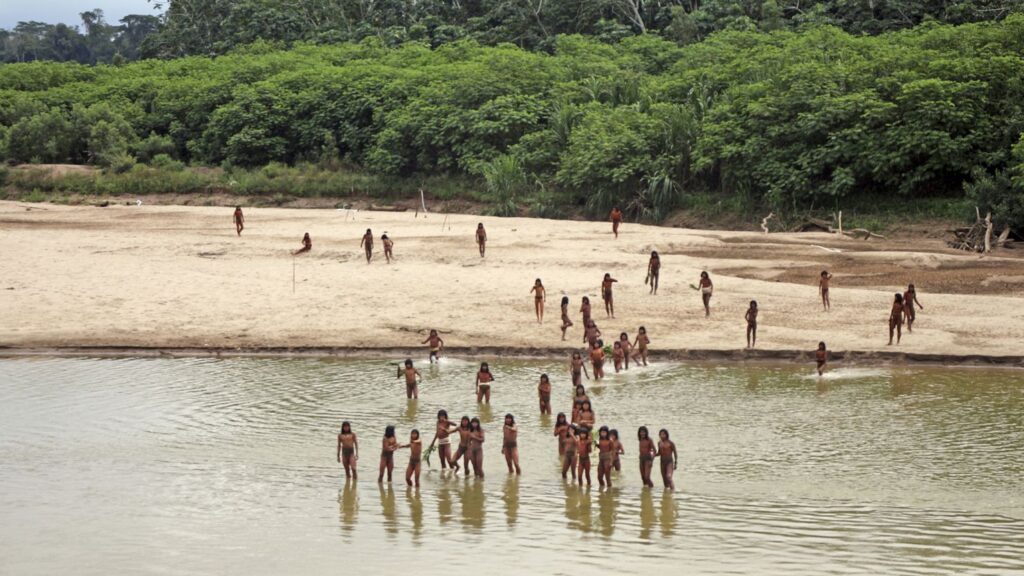

Remote Indigenous Tribe Kills Two Loggers Encroaching on Their Land in Peru
In a tragic yet significant event highlighting the ongoing conflict between Indigenous rights and illegal exploitation, two loggers were killed by a remote Indigenous tribe in the Peruvian Amazon in late 2024. The loggers had allegedly been encroaching on the tribe’s land, violating Indigenous territorial rights and threatening their way of life. This incident underscores the escalating tensions in the Amazon region, where illegal logging, mining, and other forms of exploitation frequently clash with the rights and sovereignty of Indigenous peoples.
The Indigenous Tribe and Their Territory
The Indigenous tribe involved in the killing is one of the many isolated groups living deep within the Amazon rainforest, part of a broader population often referred to as “uncontacted” or “voluntarily isolated” peoples. These tribes maintain a deliberate separation from modern society, living in one of the most biodiverse and ecologically vital areas on the planet. Their territories are legally protected under Peruvian law and international human rights frameworks, such as the United Nations Declaration on the Rights of Indigenous Peoples (UNDRIP).
These tribes depend on the forest for their survival, relying on hunting, fishing, and small-scale farming. Any encroachment on their land is not only a violation of their legal rights but also a direct threat to their lives and culture.
Illegal Logging and Land Exploitation in Peru
The Amazon rainforest has long been a target for illegal logging, driven by the global demand for timber and other natural resources. Despite efforts by the Peruvian government and international organizations to curb illegal activities, loggers, miners, and farmers often enter Indigenous lands in search of resources, exacerbating the deforestation crisis in the region.
In recent years, illegal logging in Peru has grown significantly due to weak enforcement of environmental laws, corruption, and limited government presence in remote areas. Indigenous territories are increasingly vulnerable to invasions by loggers, who often destroy large areas of forest in their operations. This has led to not only environmental devastation but also violent conflicts with Indigenous groups defending their land.
The Incident
According to reports from local authorities and Indigenous advocacy organizations, the two loggers were killed after they were found cutting down trees on land protected for Indigenous use. The loggers, whose identities have not been made public, had allegedly entered the territory without permission, likely driven by the financial allure of valuable timber. The tribe, recognizing the encroachment as a threat, responded with deadly force, resulting in the deaths of the loggers.
Local Indigenous leaders have expressed sorrow over the violence but emphasized that their community acted in self-defense. For many isolated tribes, any outside contact is perceived as dangerous, both because of the risk of diseases (to which they have little to no immunity) and because of the immediate threat posed by loggers or other intruders.
Legal and Ethical Implications
The incident raises critical legal and ethical questions about the ongoing struggle to protect Indigenous lands and preserve their autonomy. Under Peruvian law, Indigenous peoples have the right to protect their territories, and their land is supposed to be off-limits to outsiders unless explicitly invited. However, in practice, enforcement of these laws is often weak, leaving tribes vulnerable to illegal activity.
The killing of the two loggers could lead to legal actions against the Indigenous community, even though the tribe was defending their legally recognized land. Human rights organizations and Indigenous advocacy groups are calling for the Peruvian government to take stronger action against illegal logging and to ensure that Indigenous peoples are not criminalized for defending their territories.
Response from the Peruvian Government and International Community
The Peruvian government has expressed concern over the deaths and has called for an investigation. However, the government faces a delicate balancing act. While they must address the violence, there is also growing pressure to strengthen protections for Indigenous lands and crack down on illegal logging operations.
International environmental and human rights organizations, including Amnesty International and Survival International, have long advocated for stricter enforcement of Indigenous land rights and for a greater effort to preserve the Amazon. These organizations have reiterated their calls in the wake of this incident, urging the Peruvian government to focus on addressing the root causes of the conflict—namely, the illegal activities encroaching on Indigenous territories.
The Broader Context: Conflict in the Amazon
This event is part of a broader pattern of conflict in the Amazon, where Indigenous peoples are increasingly at the frontlines of the fight to preserve the rainforest. As one of the most biologically diverse regions in the world, the Amazon is vital to the global climate system, yet it faces unprecedented threats from deforestation, agriculture, and resource extraction. The Amazon rainforest, often referred to as the “lungs of the planet,” absorbs significant amounts of carbon dioxide and plays a crucial role in regulating the Earth’s climate.
Indigenous peoples have lived in harmony with the forest for centuries, and their stewardship is widely recognized as essential for its preservation. However, the encroachment of illegal loggers, miners, and ranchers has led to violent clashes, with Indigenous leaders being targeted and killed in some cases.
In response to this incident, experts are once again calling for stronger measures to protect Indigenous rights and for increased international attention to the exploitation of the Amazon rainforest. Without decisive action, these conflicts will likely continue, endangering both the survival of Indigenous peoples and the health of the planet.
Conclusion
The killing of two loggers by a remote Indigenous tribe in Peru highlights the ongoing conflict over land rights and illegal exploitation in the Amazon. While the deaths are tragic, they reflect a deeper issue: the failure to adequately protect Indigenous territories from external threats. As pressure on the Amazon rainforest grows, the international community must support efforts to defend Indigenous rights and stop the illegal activities that are devastating the environment and threatening the lives of those who call the rainforest home.