
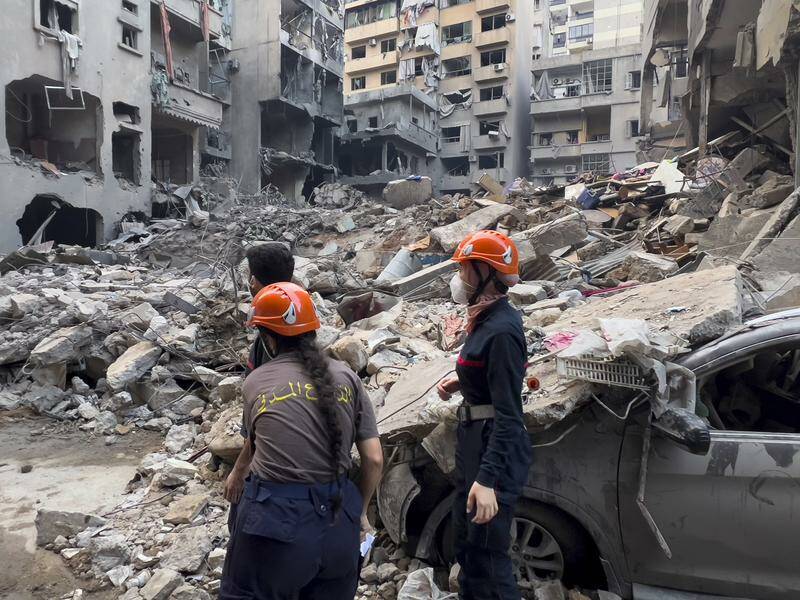

At least 22 people have been killed in Israeli airstrikes that hit central Beirut late last night, marking one of the most significant escalations in the ongoing conflict between Israel and Hezbollah militants in Lebanon. The strikes targeted areas believed to be Hezbollah strongholds but caused widespread destruction in residential neighborhoods, raising concerns about the growing humanitarian toll of the conflict.
Intense Bombardment in Beirut
The airstrikes, which occurred in the early hours of the morning, struck multiple locations across central Beirut, including heavily populated districts. Local officials confirmed that at least 22 people were killed and dozens more injured, with emergency teams continuing to search through the rubble for survivors. Hospitals in the area have been overwhelmed by the number of casualties, many of whom are civilians.
Eyewitnesses reported scenes of chaos as buildings collapsed, cars were destroyed, and fires raged through the night. One resident described the scene as “apocalyptic,” with thick smoke filling the streets and the constant sound of explosions and sirens.
“I never imagined this could happen in the heart of our city,” said Rana, a Beirut resident. “It feels like nowhere is safe anymore.”
Israel’s Response to Hezbollah Attacks
The strikes came in response to recent rocket fire and drone attacks launched by Hezbollah from southern Lebanon into Israeli territory, which escalated tensions along the Israel-Lebanon border. Israeli officials stated that the airstrikes were aimed at military infrastructure used by Hezbollah to store weapons and coordinate attacks, asserting that the strikes were necessary to neutralize threats to Israeli security.
“Israel will not tolerate terrorist attacks on its citizens,” said an Israeli military spokesperson. “We will continue to take decisive action to defend our country and eliminate the capabilities of those who seek to harm us.”
Despite these assertions, the strikes hit civilian areas, drawing widespread condemnation and raising questions about the proportionality of the response. Lebanese officials and humanitarian organizations have called for an immediate halt to the violence, stressing that innocent civilians are bearing the brunt of the conflict.
Growing Humanitarian Crisis
The conflict has already displaced thousands of people in Lebanon, many of whom are fleeing the southern regions to escape the bombardments. With strikes now reaching the densely populated capital of Beirut, the humanitarian crisis is worsening. Aid organizations are warning of a looming disaster as basic services such as water, electricity, and medical care become scarce in the hardest-hit areas.
The United Nations has called for an immediate ceasefire and urged both sides to show restraint. “We are deeply concerned by the rising number of civilian casualties and the destruction of civilian infrastructure,” said a UN spokesperson. “All parties must adhere to international humanitarian law and protect civilian lives.”
International Reactions
International reactions to the airstrikes have been swift, with calls for de-escalation from global leaders. The European Union and United States have both expressed concern over the situation, urging restraint on both sides to avoid a further spiral of violence. However, diplomatic efforts to broker a ceasefire have so far been unsuccessful.
In the Arab world, several countries, including Lebanon and Syria, have condemned the strikes, accusing Israel of violating Lebanese sovereignty and contributing to the destabilization of the region. Iran, a key backer of Hezbollah, also condemned the attacks and vowed to continue supporting the group’s resistance against Israel.
Escalation of a Broader Conflict
The airstrikes in Beirut mark a dangerous escalation in a broader conflict that has been simmering for years. Hezbollah, a powerful political and militant group in Lebanon, has long been engaged in hostilities with Israel, and the border region between the two countries has seen frequent flare-ups of violence. However, the extension of the conflict into central Beirut represents a significant shift in the intensity and scope of the fighting.
Political analysts warn that the situation could spiral into a full-blown war if neither side steps back from the brink. The Lebanese government is under pressure to respond to the attacks while grappling with an already fragile political and economic situation. Meanwhile, Israel faces growing internal pressure to decisively eliminate the Hezbollah threat.
Conclusion
As the death toll rises and tensions escalate, the international community is urging both Israel and Hezbollah to seek a diplomatic solution before the conflict leads to even greater devastation. For now, the people of Beirut and southern Lebanon remain caught in the crossfire, as strikes and retaliations continue to claim more lives and displace even more civilians. The coming days will be critical in determining whether the conflict can be de-escalated or if it will spiral further into violence.