

Israeli Protests Demand Gaza Deal After IDF Announces Death of Six Hostages
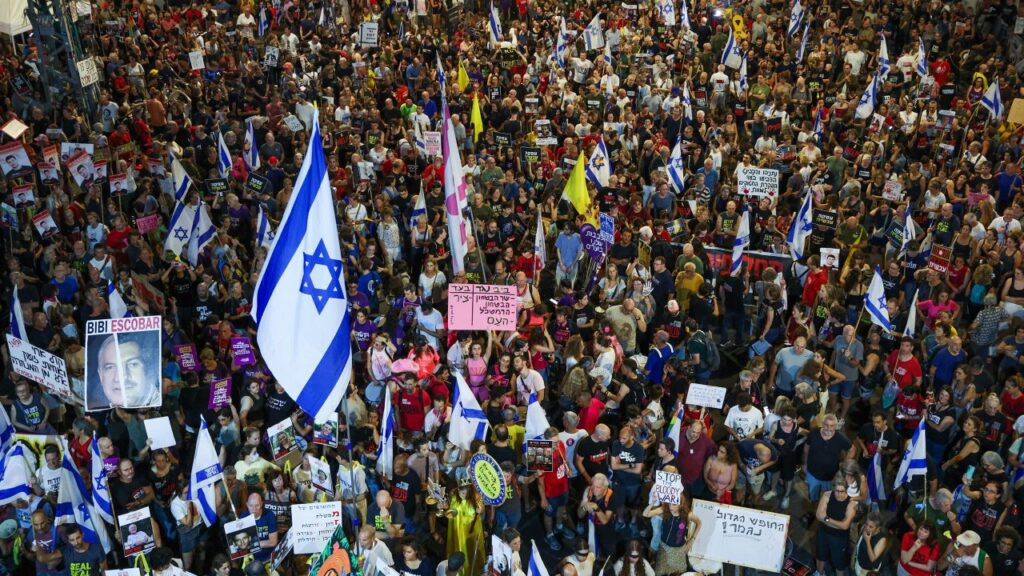
In a tense and emotionally charged atmosphere, thousands of Israelis took to the streets demanding urgent action following the Israeli Defense Forces’ (IDF) announcement that six hostages held by Hamas in Gaza were killed. The protests, which have spread across multiple cities, reflect growing public pressure on the Israeli government to negotiate a deal to secure the release of the remaining hostages and bring an end to the ongoing violence.
The Tragic News
The announcement from the IDF has sent shockwaves through Israeli society, already grappling with the aftermath of the conflict in Gaza. The identities of the six hostages, who were reportedly killed during Israeli airstrikes targeting Hamas positions, have not been fully disclosed, but their deaths have reignited fears for the safety of those still held captive. The IDF has faced criticism for its handling of the situation, with many accusing the military of failing to prioritize the hostages’ safety in its operations.
Growing Public Outcry
The latest development has fueled widespread anger and frustration among the Israeli public. Protesters, carrying signs that read “Bring Them Home” and “No More Bloodshed,” have gathered outside government buildings and military headquarters, calling for immediate negotiations with Hamas. The protesters, many of whom are family members of the hostages, have demanded that the government put diplomacy first and secure the release of the captives before further military action is taken.
The protests have been largely peaceful, though there have been reports of clashes with police in some areas. The demonstrators have criticized Prime Minister Benjamin Netanyahu’s government for its perceived failure to protect Israeli citizens and for what they see as a lack of transparency about the situation in Gaza.
The Government’s Response
In response to the protests, Prime Minister Netanyahu has reiterated his government’s commitment to bringing the hostages home but has stopped short of committing to a ceasefire or direct negotiations with Hamas. The Israeli government has long maintained that it does not negotiate with terrorist organizations, a stance that complicates any potential deal to secure the hostages’ release.
Netanyahu’s administration has also faced internal criticism, with some members of the Knesset calling for a reassessment of the government’s strategy in Gaza. There is growing concern that continued military operations could lead to further loss of life among the hostages, as well as increased civilian casualties in the densely populated Gaza Strip.
International Reactions
The international community has been closely monitoring the situation, with several countries and organizations calling for a de-escalation of the conflict. The United Nations has urged both Israel and Hamas to prioritize the safety of civilians and hostages, while some nations have offered to mediate negotiations between the two sides.
Human rights organizations have also condemned the killing of the hostages, calling it a violation of international law. Amnesty International and Human Rights Watch have both issued statements urging Israel to take all necessary measures to protect civilian lives and to seek a peaceful resolution to the conflict.
What Lies Ahead
The protests in Israel are likely to continue as the public demands action from their government. The situation remains volatile, with the potential for further escalation if a deal is not reached soon. The deaths of the six hostages have underscored the human cost of the ongoing conflict and have intensified calls for an end to the violence.
As the Israeli government faces increasing pressure both domestically and internationally, the coming days will be critical in determining whether a diplomatic solution can be found or if the conflict will continue to escalate. The fate of the remaining hostages hangs in the balance, and with it, the prospects for peace in the region.