

Grenfell Tower Fire: Britain’s Deadliest Since World War II, Caused by ‘Decades of Failure,’ Report Says
The Grenfell Tower fire, which occurred on June 14, 2017, stands as one of the most devastating tragedies in modern British history. The blaze, which rapidly consumed the 24-story residential building in West London, resulted in the deaths of 72 people and left countless others traumatized. A recent report has concluded that this catastrophe was not just a result of isolated mistakes, but rather the culmination of “decades of failure” at multiple levels, including government regulation, corporate responsibility, and housing management.
The Fire and Its Immediate Impact
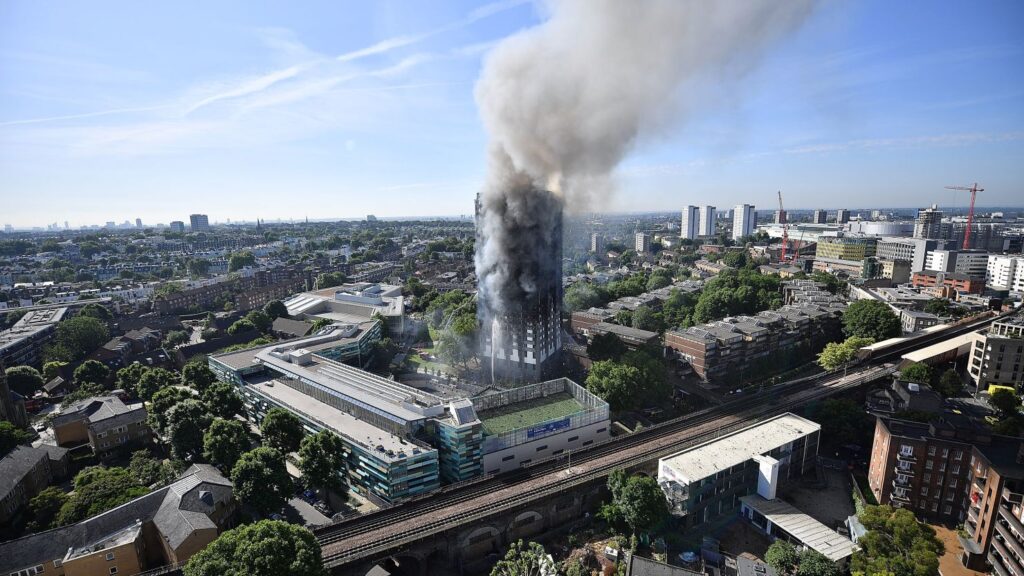
The Grenfell Tower fire began in the early hours of June 14, reportedly sparked by a faulty refrigerator on the fourth floor. The flames quickly spread up the exterior of the building, fueled by highly flammable cladding and insulation materials that had been installed during a recent refurbishment. The fire engulfed the entire building within minutes, trapping residents inside and making escape impossible for many.
The immediate response to the fire was chaotic and tragic. Emergency services arrived quickly, but the intensity and speed of the fire overwhelmed their efforts. Many residents were advised to stay in their flats, following the “stay put” policy, which tragically proved fatal as the fire continued to spread unabated. By the time the fire was finally brought under control, 72 people had lost their lives, and over 70 others were injured.
Decades of Failure: The Root Causes
A report published after extensive investigations and inquiries has pointed to systemic failures over decades as the root cause of the Grenfell disaster. The findings highlight multiple areas where regulatory, corporate, and governmental failures contributed to the tragedy.
- Regulatory Lapses: The report underscores how building regulations in the UK had become increasingly lax over the years, particularly concerning fire safety. Successive governments had failed to update fire safety regulations to account for modern building materials and methods, despite repeated warnings and incidents that indicated the need for reform. The use of combustible cladding and insulation on high-rise buildings, like Grenfell Tower, was a direct result of these regulatory shortcomings.
- Corporate Negligence: The refurbishment of Grenfell Tower, which included the installation of the flammable cladding, was carried out by several contractors and sub-contractors who, according to the report, failed to prioritize safety. Cost-cutting measures were identified as a significant factor in the choice of materials, with cheaper, less safe options being selected over more expensive, fire-resistant alternatives. The report also criticized the manufacturers of the cladding and insulation for failing to adequately test their products for fire safety.
- Government and Local Authority Failures: The report also lays blame on both the local and central government for their roles in the disaster. The Royal Borough of Kensington and Chelsea, which owned and managed Grenfell Tower, was found to have neglected its responsibilities to ensure the safety of its residents. Moreover, the government’s failure to heed warnings from previous fires and inquiries, such as the 2009 Lakanal House fire, which highlighted the dangers of combustible cladding, contributed to the conditions that led to the Grenfell tragedy.
- Social Housing Neglect: The report further emphasizes how social housing in the UK has been marginalized over the years, with insufficient investment and a lack of oversight leading to deteriorating conditions for residents. Grenfell Tower, like many other social housing buildings, was home to some of the most vulnerable members of society, and the tragedy brought to light the stark inequalities and neglect that have long plagued the social housing sector.
The Aftermath and Calls for Change
In the years following the Grenfell Tower fire, there has been significant public outcry and a demand for accountability and change. Survivors and families of the victims have called for justice, seeking answers as to how such a disaster could happen in one of the wealthiest cities in the world.
The report has led to renewed calls for comprehensive reform in fire safety regulations, social housing policies, and corporate accountability. The government has pledged to implement new regulations to prevent such a tragedy from happening again, including the removal of dangerous cladding from other buildings across the country.
However, progress has been slow, and many affected by the fire feel that not enough has been done to address the underlying issues. The Grenfell Tower fire serves as a stark reminder of the consequences of neglect and the urgent need for systemic change to protect the most vulnerable members of society.
Conclusion
The Grenfell Tower fire was a tragedy of unprecedented scale in modern Britain, and the recent report has made it clear that this disaster was the result of “decades of failure.” From inadequate regulations and corporate negligence to government and local authority shortcomings, the fire exposed deep-rooted issues that had been ignored for too long. As Britain reflects on the lessons learned from Grenfell, it is imperative that meaningful action is taken to ensure that such a catastrophe never happens again.