
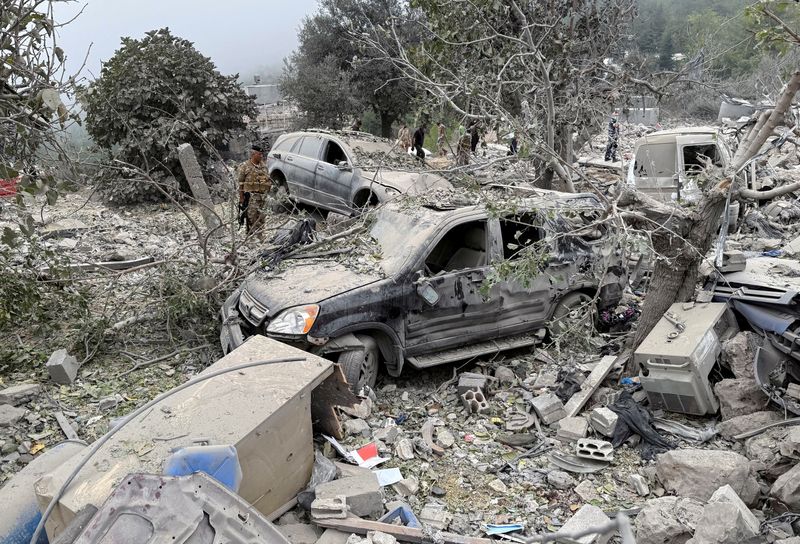

Lebanon, a nation grappling with profound political and economic crises, is once again at the center of international concern as world powers push for urgent aid and a ceasefire to prevent further destabilization. Described as facing a “destructive storm” of challenges, the country’s fragile state is being exacerbated by escalating violence, severe economic turmoil, and a humanitarian crisis that has left much of the population in dire need of assistance.
Escalating Violence and Calls for a Ceasefire
Lebanon has been plagued by mounting violence in recent months, particularly in its southern regions near the Israeli border, where clashes between Hezbollah militants and Israeli forces have raised fears of a wider conflict. The situation has been further complicated by the country’s longstanding sectarian divides and the presence of various militant groups operating in the region.
In response, international leaders and humanitarian organizations are calling for an immediate ceasefire to halt the bloodshed and prevent Lebanon from descending into full-scale conflict. World powers, including the United States, France, and the United Nations, have been working behind the scenes to broker peace talks between the warring factions, urging all sides to lay down arms in the interest of regional stability and the protection of civilians.
French President Emmanuel Macron has been particularly vocal in calling for international support to restore peace, warning that Lebanon is at a “breaking point.” He emphasized the need for a comprehensive ceasefire agreement that addresses both immediate security concerns and the root causes of the conflict, including the political paralysis that has hampered governance in the country for years.
Humanitarian Crisis and Economic Collapse
Lebanon’s already fragile economy has collapsed under the weight of years of mismanagement, corruption, and the impact of the COVID-19 pandemic. The situation worsened in 2020 following the Beirut port explosion, which devastated large parts of the capital and left hundreds of thousands homeless. Since then, the Lebanese currency has plummeted, inflation has skyrocketed, and basic services such as electricity, healthcare, and education have become scarce.
International organizations estimate that more than 80% of the population now lives in poverty, with access to essential resources such as food, water, and fuel increasingly limited. The UN and NGOs have been sounding the alarm about the dire humanitarian situation, with many Lebanese families forced to rely on aid just to survive.
World powers have been pushing for an influx of humanitarian aid to address the growing crisis. The European Union and the United States have pledged significant financial support, focusing on providing food, medical supplies, and support for rebuilding critical infrastructure. However, many donors have conditioned long-term financial assistance on political reforms within Lebanon, expressing concerns over corruption and the inefficiency of the current government.
A Political System in Paralysis
One of the central challenges in delivering aid and achieving a ceasefire in Lebanon is the country’s political paralysis. Lebanon’s confessional political system, which divides power among the country’s religious sects, has been a source of gridlock for years. Repeated failures to form a stable government have left Lebanon without effective leadership, undermining efforts to address its many crises.
The international community has urged Lebanese leaders to break the deadlock and institute urgent political reforms. President Macron has spearheaded efforts to mediate between Lebanon’s political factions, pushing for the formation of a new government capable of implementing necessary reforms and restoring stability. However, progress has been slow, with entrenched political elites resistant to change.
World Powers Urge for Action
The push for aid and a ceasefire comes amid growing concerns that Lebanon’s instability could have wider regional consequences. The country’s strategic location in the Middle East and its history of acting as a battleground for proxy conflicts between larger powers, such as Iran and Israel, have made it a focal point of international diplomacy.
In a recent joint statement, the United Nations, France, the United States, and other international stakeholders reiterated their commitment to Lebanon’s stability, urging all factions to cease hostilities and prioritize the welfare of the Lebanese people. The statement emphasized the importance of sovereignty, urging foreign powers not to exploit Lebanon’s internal divisions for their own geopolitical interests.
Conclusion
As Lebanon continues to navigate its “destructive storm” of violence, political dysfunction, and economic collapse, the international community is ramping up efforts to provide both immediate humanitarian relief and long-term solutions to the country’s deep-rooted problems. The push for a ceasefire and coordinated aid packages offers a glimmer of hope, but much depends on whether Lebanon’s political leaders can overcome their divisions and work toward a unified, peaceful, and prosperous future for the country.
With the region on edge and the Lebanese people suffering, world powers are under increasing pressure to act decisively before the situation deteriorates further. Whether these efforts will be enough to stave off a complete collapse remains to be seen, but the stakes for Lebanon and the broader Middle East have never been higher.