
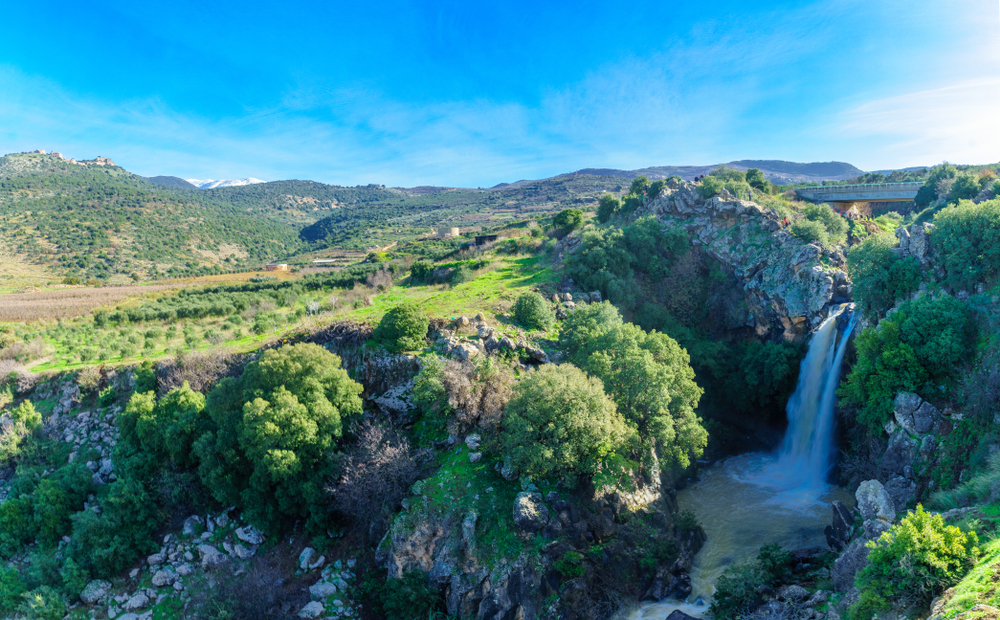

The Golan Heights: A Contested Territory with Strategic Importance
The Golan Heights, a region of significant geopolitical and strategic importance, remains a focal point of contention in the Middle East. This article delves into the history, current status, and implications of this contested area, providing an overview of why the Golan Heights continues to be a critical issue in regional and international politics.
Geographic and Strategic Significance
The Golan Heights is a plateau located in the Levant, spanning about 1,800 square kilometers. It borders Lebanon to the north, Israel to the west, Jordan to the south, and Syria to the east. The region’s high altitude provides it with strategic military advantages, offering commanding views over southern Syria and northern Israel. Control of the Golan Heights allows for significant oversight of movements and activities in these areas, making it a crucial point for military defense and security.
Historical Context
Pre-1967
Before 1967, the Golan Heights was part of Syria. The region was sparsely populated but held strategic military value due to its elevated position. The area saw frequent skirmishes and shelling between Syrian and Israeli forces, contributing to heightened tensions in the region.
The Six-Day War
In June 1967, during the Six-Day War, Israel captured the Golan Heights from Syria. This conflict saw Israel seizing control of several territories, including the West Bank, Gaza Strip, and Sinai Peninsula. The Golan Heights was subsequently annexed by Israel in 1981, a move not recognized by the international community, including the United Nations, which continues to regard the area as Syrian territory occupied by Israel.
The Modern Era
Israeli Control
Since the annexation, Israel has established settlements in the Golan Heights and invested in infrastructure, agriculture, and tourism. The area is home to around 50,000 people, including both Jewish settlers and Druze communities, the latter of whom have historically been more aligned with Syria. The Israeli government argues that the Golan Heights is vital for its security, citing the region’s strategic military significance and the need to prevent potential attacks from Syrian or other hostile forces.
Syrian Perspective
Syria has consistently demanded the return of the Golan Heights, viewing the territory as an integral part of its sovereign land. The Syrian government, supported by numerous international actors, considers Israel’s occupation illegal and calls for negotiations based on the principle of land for peace, as outlined in various United Nations resolutions.
International Stance
The international community remains largely aligned with the United Nations’ position that the Golan Heights is occupied Syrian territory. However, in 2019, the United States under the Trump administration broke with this consensus, formally recognizing Israeli sovereignty over the Golan Heights. This move was met with widespread condemnation from other countries and international organizations, who viewed it as a violation of international law and a potential destabilizing factor in the region.
Current Dynamics
Security Concerns
The ongoing Syrian civil war and the presence of various militant groups in the region have added complexity to the situation. Israel cites the instability in Syria and the activities of Iranian-backed forces near its borders as justification for maintaining control over the Golan Heights. The area has seen occasional clashes and exchanges of fire, underscoring its volatile nature.
Economic and Environmental Aspects
The Golan Heights is also important economically, particularly for its water resources and agricultural potential. The region contains the headwaters of the Jordan River, a crucial water source for Israel, Jordan, and Palestine. Additionally, the area is known for its vineyards and wineries, contributing to Israel’s agricultural sector.
The Golan Heights remains a deeply contested and strategically critical region in the Middle East. Its complex history, coupled with ongoing security concerns and international disputes, ensures that it will continue to be a key issue in regional and global politics. The path to a resolution remains uncertain, with both Israeli and Syrian interests deeply entrenched and broader geopolitical dynamics influencing the prospects for peace and stability in this historically volatile area.